Guest Feature: Grief Eater
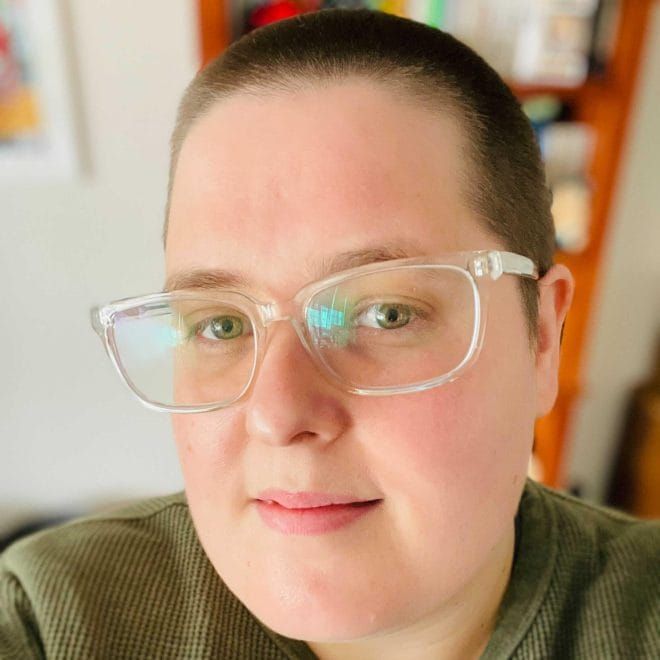
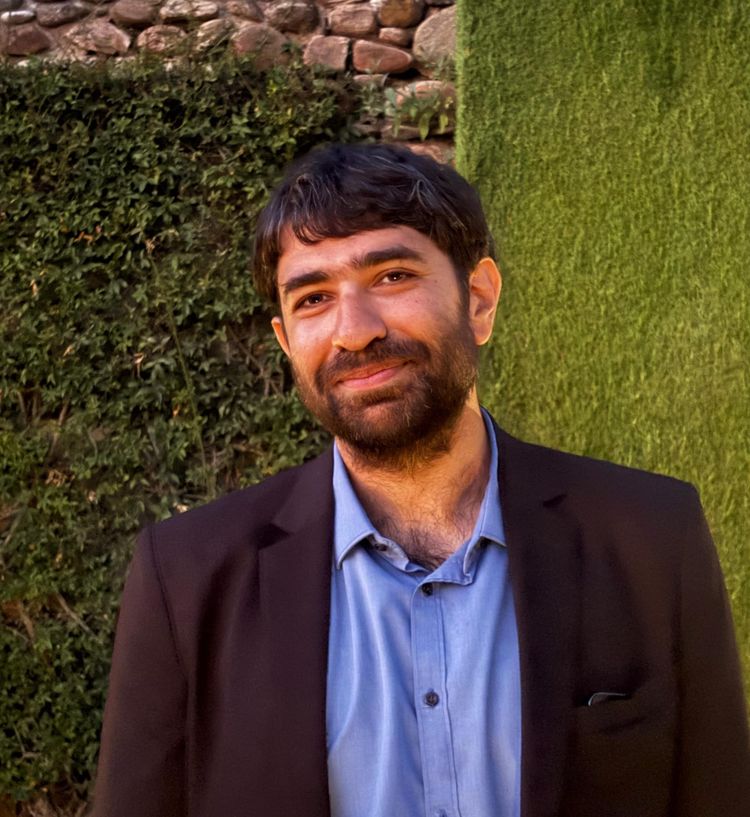
Emma Osborne (they/them) is a queer fiction writer and poet from Naarm Melbourne, Australia. Emma’s writing has appeared in Uncanny Magazine, Nightmare Magazine, Shock Totem, Apex Magazine, Queers Destroy Science Fiction, Pseudopod, Podcastle, Kaleidotrope, the Review of Australian Fiction, the Year’s Best Australian Fantasy and Horror, GlitterShip, Archer Magazine, Hometown Haunts edited by Poppy Nwosu, and Wastelands 3: The New Apocalypse edited by John Joseph Adams.
Emma is a graduate of the 2016 Clarion West Writers Workshop. Their debut novella Grief Eater is forthcoming at Interstellar Flight Press. They currently live in Sunbury with their girlfriend and three wonderful cats. You can find Emma on BlueSky at @redscribe or Instagram at @redscribed.
One of the things that has always fascinated me is books and stories written from unusual points of view (POVs). I absolutely love reading beyond the ordinary tight third or second person or even a rich first person (Robin Hobb, I’m looking at you), although of course they’re all splendid when used well, and I must confess a strong love for writing in second-person perspective.
Still! I’m truly fascinated when a writer does something completely different with their character’s perspective or construction. Hiron Ennes, in their exquisite masterpiece Leech, uses the POV of a virus hive-mind that spans tens of thousands of bodies, all of them physicians. When one of the bodies dies mysteriously, the virus sends another to investigate at the scene—a gothic castle in the snow, no less.
The gorgeous Ancillary Justice by Ann Leckie is told from the perspective of a starship with thousands of human bodies in addition to their ship-body. In N.K. Jemisin’s The City We Became, major cities become sentient and develop human avatars; the book is told from the perspective of the avatars of the five boroughs of New York City who awaken after the main avatar goes missing. See, I love that shit!
While I wasn’t as ambitious as the authors I’ve listed when writing my debut, Grief Eater, I was delightfully inspired. I was thrilled to tackle Kristina’s story, which takes place in large part after she is bitten and killed by a zombie. Indeed, she dies in the opening scene. I wanted to explore the "what’s next?” after Kristina dies and turns into a creature of stamina and sharp teeth. What does she see? Hear? Smell? How do her desires and fears change when she becomes something stronger, faster, fiercer?
One of the biggest tragedies of the book, and one of the most interesting to write, was that while Kristina gains physical power and near-invincibility in her undead state, she can no longer process or constructively work through her trauma and grief. When she turns, the neat compartmentalisation she uses to stow away her traumatic childhood cracks open, and everything she didn’t want to feel rushes through her like an avalanche. Yet, being dead, she no longer has any capacity to heal or process, or for lack of a better way to put it, emotionally regulate. That’s all gone. All she can do is either allow herself to slip into a mindless frenzy of feeding and killing or retain some sense of herself through sheer will so she can hunt down the family who neglected and abused her.
Another fascinating challenge I came across while writing Grief Eater was around how Kristina understands herself in relation to other people and their experiences. Aside from her best friend Josh (whose story you can read in Nightmare Magazine—“Don’t Pack Hope”) she is relatively emotionally isolated and perhaps doesn’t fully understand the extent of the difficulties of her past. We Trauma Kids (tm) are pretty familiar with telling people a casual childhood story, only to have them stare at us with dropped jaws (bonus points if this happens while you’re speaking to your therapist) and then reassure us that no, that absolutely isn’t a normal thing that people experience. Kristina, being dead, doesn’t immediately have a way to figure this out. So, I gave her a way to empathise with people and their experiences through their blood. When she eats a person, Kristina imbibes fragments of memory and emotion. She can see, for example, the deep love her first kill feels for his young daughter. In understanding that emotion at a sensory, bodily level, Kristina then realizes that such a love is, tragically, completely outside of her experience of family. This revelation eventually drives her forward, in heartbreak and fury, to hunt down her family. For revenge, yes, but also in a desperate quest to understand how they feel about her.
Kristina’s story is not a happy one, but there are moments of light nonetheless. Without spoiling the story, I will say that she does discover that there is one person who loves her with their entire heart.
Writing a character who has a bodily experience that I will (hopefully!) never personally understand, who retains awareness even when dead, was a beautiful challenge, and one that I look forward to building upon as I continue to grow as a writer. Maybe there’s a multi-body hive-mind in my creative future! I hope so!
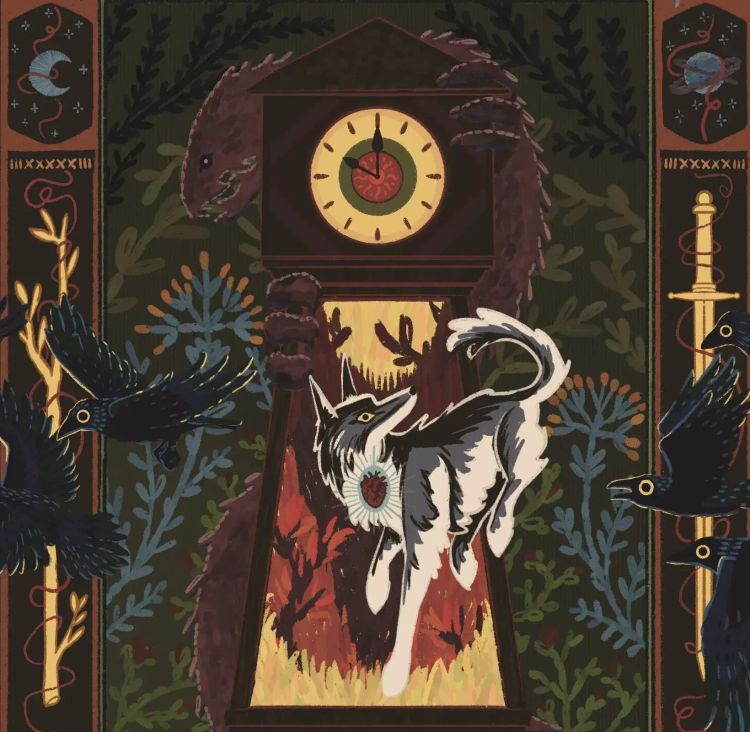
PRE-ORDER Grief Eater by Emma Osborne
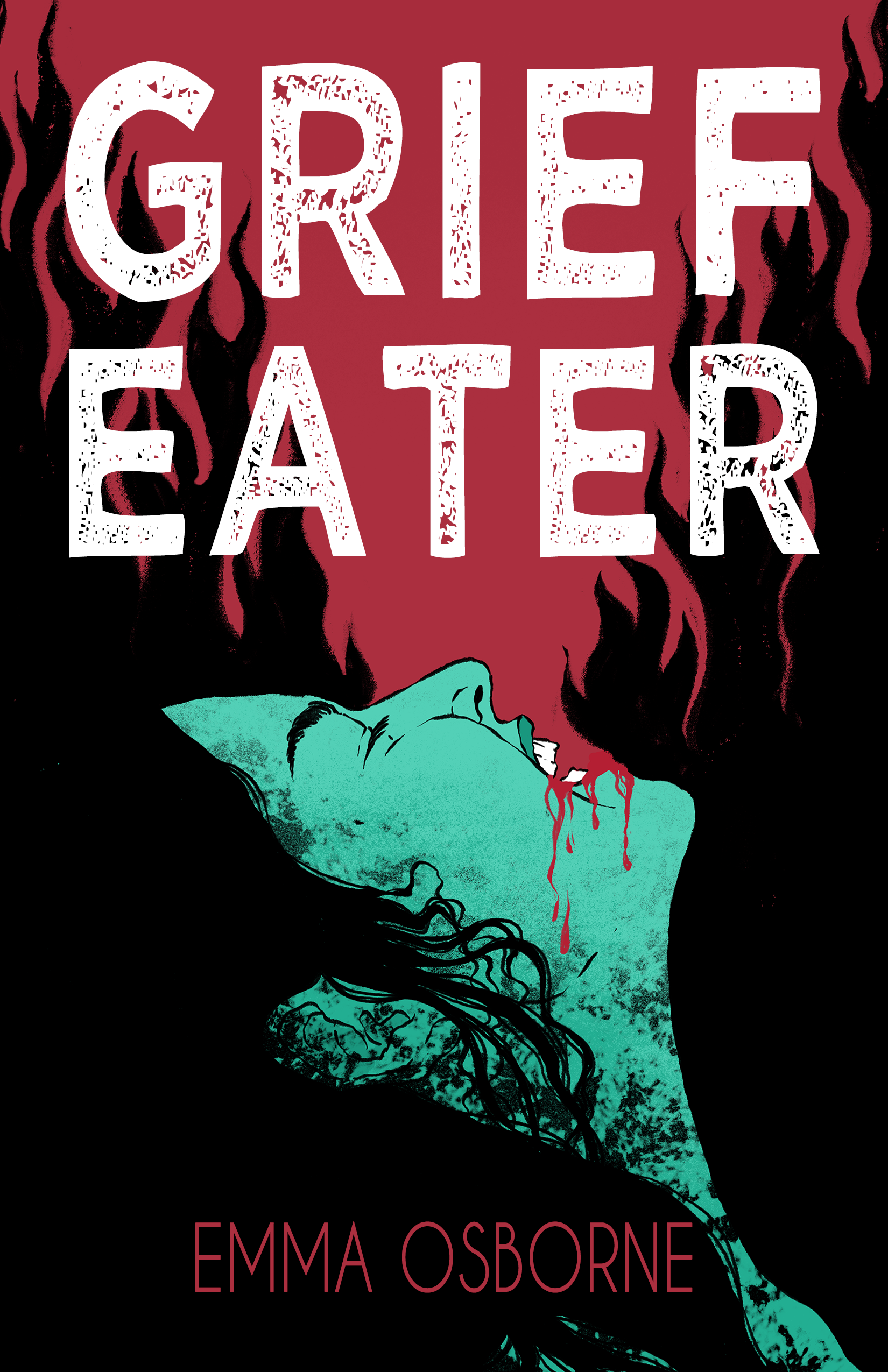
Visceral, gritty, and unforgiving, Grief Eater is a zombie story like you've never read before.
When Kristina rises from her violent death, she's not the same fragile woman her family once abandoned. She's rageful, powerful, and hungry—for the blood of the ones who were supposed to love her. With a newfound craving to see vengeance and grief served, she launches into a once-in-an-undead-lifetime journey across bloodslicked highways to the scorched Australian bush and her hometown. As her body fails and her mind fractures, she's left with one final question: Is she here to forgive, or to feed?
A transgressive, gory examination of queer identity and found family, Grief Eater sinks its teeth into trauma and what it means to be devoured by grief.
Barnes & Noble | Bad River Website | Find an Indie Bookstore
Thank you, Emma!!
If you’re a paying subscriber, come say hello in the Supper Club discord and share the ways you’re connecting with and supporting your local community. Remember to drop your local mutual aid networks so we can put them in future issues of the Digest.
In the meantime, do what you can. Care for yourself and the people around you. Believe that the world can be better than it is now. Never give up.
—gailey
Member discussion