
Real Housewives of the Revolution
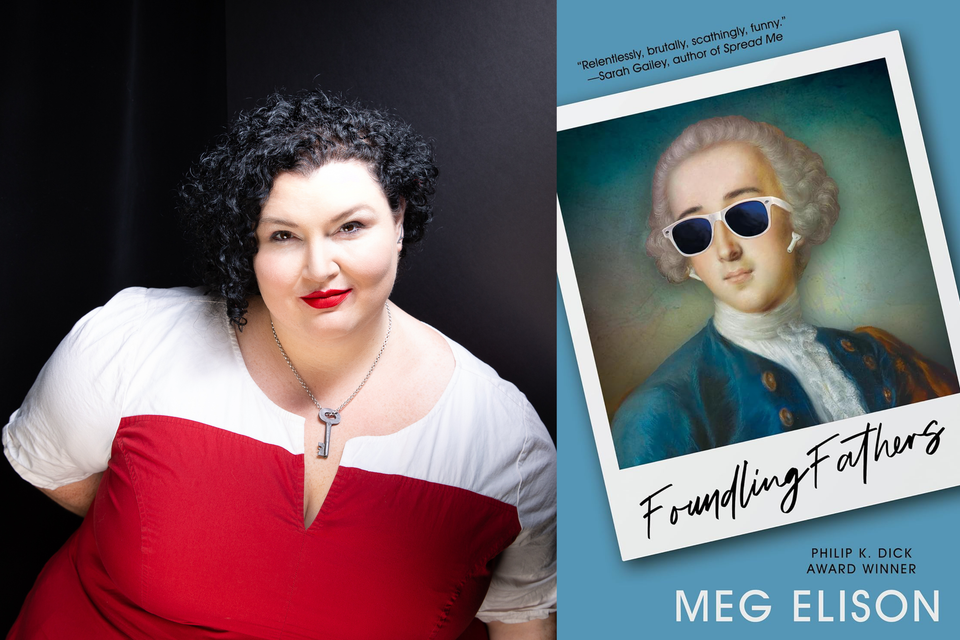
Meg Elison is a DC area author and essayist. She writes science fiction and horror, as well as feminist essays and cultural criticism. She has been published in McSweeney’s Internet Tendency, Fangoria, Fantasy and Science Fiction, Catapult, and many other places.
She is a member of the Science Fiction Writers Association (SFWA) and the National Writers Union (@paythewriter).
Her debut novel, The Book of the Unnamed Midwife won the 2014 Philip K. Dick Award. Her novelette, The Pill won the 2021 Locus Award. She is a Hugo, Nebula, and Sturgeon Awards finalist. She has been an Otherwise Award honoree twice. Her YA debut, Find Layla was published in fall 2020 by Skyscape. It was named one of Vanity Fair's Best 15 Books of 2020. Her parasocial thriller, Number One Fan was published in August 2022 by Mira Books. Her satire Foundling Fathers is out now from Tachyon.
Elison is a high school dropout and a graduate of UC Berkeley.
If you, like me, grew up in the United States, we share some great man myths about some bitchy, catty dudes.
As children, we were taught a sanitized and edited version of the history of our country. Most of us went through the same pattern of realization of figuring out the truth about Native Americans, about the Japanese incarceration, and the MOVE bombing. Most of us experienced a slow-roll horror movie of revelations about things we were never taught, things we had to find out on our own that paint a dirtier and darker picture of our national character. But most people don’t read deeply enough to find out that the founding fathers were actually the Real Housewives of the Revolution.
The truth of these lives is deeply documented in preserved letters and diaries, in their acts of government, like Adams’ 1798 Alien and Sedition Act (recently revived for the purposes of denaturalizing American citizens). Most of us have learned the blanket truth that white landowning men mostly orchestrated American independence for their own purposes of tax evasion and export profits, but few of us delve into their individual failures, scandals, and stupidities.
When I was researching these men to know their voices better, I found myself astonished and amused by how different the truth was from their legends. This project went from feeling like PBS to Interview with the Vampire in seconds. George Washington, the big war hero, suffered sweeping defeats on the battlefield based on his own negligence and bad ideas. I remembered the brief characterization of him in the musical Hamilton (itself another engine of myth-making) when he sings:
I led my men straight into a massacre
I witnessed their deaths firsthand
I made every mistake
and felt the shame rise in me
and even now I lie awake
knowing history has its eyes on me
And she did have her eyes on him, gods know. But her hand was guided by other men to write the story, and so the version of Washington that school children receive is honorable, thoughtful, and humble. Just like we receive a John Adams who was sharp instead of vindictive, and a Franklin who was inventive rather than venal.
The amusement came in the discovery of how catty and bitchy these men were. Adams wrote in a letter about Hamilton that his boundless energy “rose from a superabundance of secretions which he could not find whores enough to draw off.” During my propagandist education, I was sold the eternal bromance between Adams and Jefferson, in which they died on the same day still pining for one another. However, their written history tells a different story. Jefferson wrote to Abigail Adams to complain about her husband to her, whining about the men Adams had appointed to the cabinet that Jefferson now had to work with as president. “I did think his last appointments to office personally unkind. They were from among my most ardent political enemies.” Abigail wrote Jefferson back and basically said ‘never shit talk my man to me again, if you like drawing breath.’
This research activated fanfic senses that have long lay dormant in my mind. I thought I was being punked when I read a story in Adams’ diary about traveling with Ben Franklin. They arrive at an inn, and it’s already late. They’re so tired from riding all day, and they just want to eat a little and sleep.
Imagine John’s horror when the innkeeper says there’s only one room. Worse than that… there’s only one bed! The two men do indeed share it, but Adams confides in his diary that the older man kept him up all night long by debating with him about whether they should sleep with the window open or shut.
Franklin is the one most often depicted as a sensualist and troublemaker, and his assertion that women don’t really age below the waist and a bag over the head solves most problems is well-known and often quoted. Less well known, perhaps, is that his wife Deborah was married to another man when she and Franklin were “informally wed.” His diaries detail many months-long voyages away from her, because she was afraid of the ocean. On these trips, he was neither faithful nor scrupulous, and acknowledged an illegitimate son in his household. The two later became dramatically estranged, separated by their positions on the war, never to reconcile. Franklin’s autobiography and letters constantly absolve himself in a voice that any reality show or vampire TV fan would recognize: that’s just the way he is. “Perhaps I was too saucy and provoking,” Franklin says, smirking at us across time, not truly believing he was ever too much of anything.
Reading history is comforting, because it reminds me that as a people, we have been this stupid before. We have suffered the rule of vain, selfish, vengeful, petty men before. Revering the past and believing it to hold some lost purity, some correct and uncorrupted way of life, is a trap. The trap was laid by that sanitized education that we share, and the bait inside it smells like simplicity. It smells like linen dresses dried in the sun and homemade bread, and of course we’re attracted to that. However, when the trap springs it reverses the progress that gave rights to everybody. It’s the same trap now as it was in 1776. It’s the smile of a Great Man, until you look close enough to see that his teeth are rusted and his gums are rotted with syphilis.
And his character is not now and never has been worthy of honor and veneration. It’s time to pry the trap open and free ourselves of the myth. It’s time to look into the maw of our history and laugh our collective asses off.
It’s not the 250th anniversary of a great man doing anything. It’s the 250th anniversary of a revolution when the people fought, and a reminder that we can do it again, regardless of what bitchy, catty fools are in charge. And we can do it while documenting their every crime, faceplant, and faux pas.
Foundling Fathers by Meg Elison
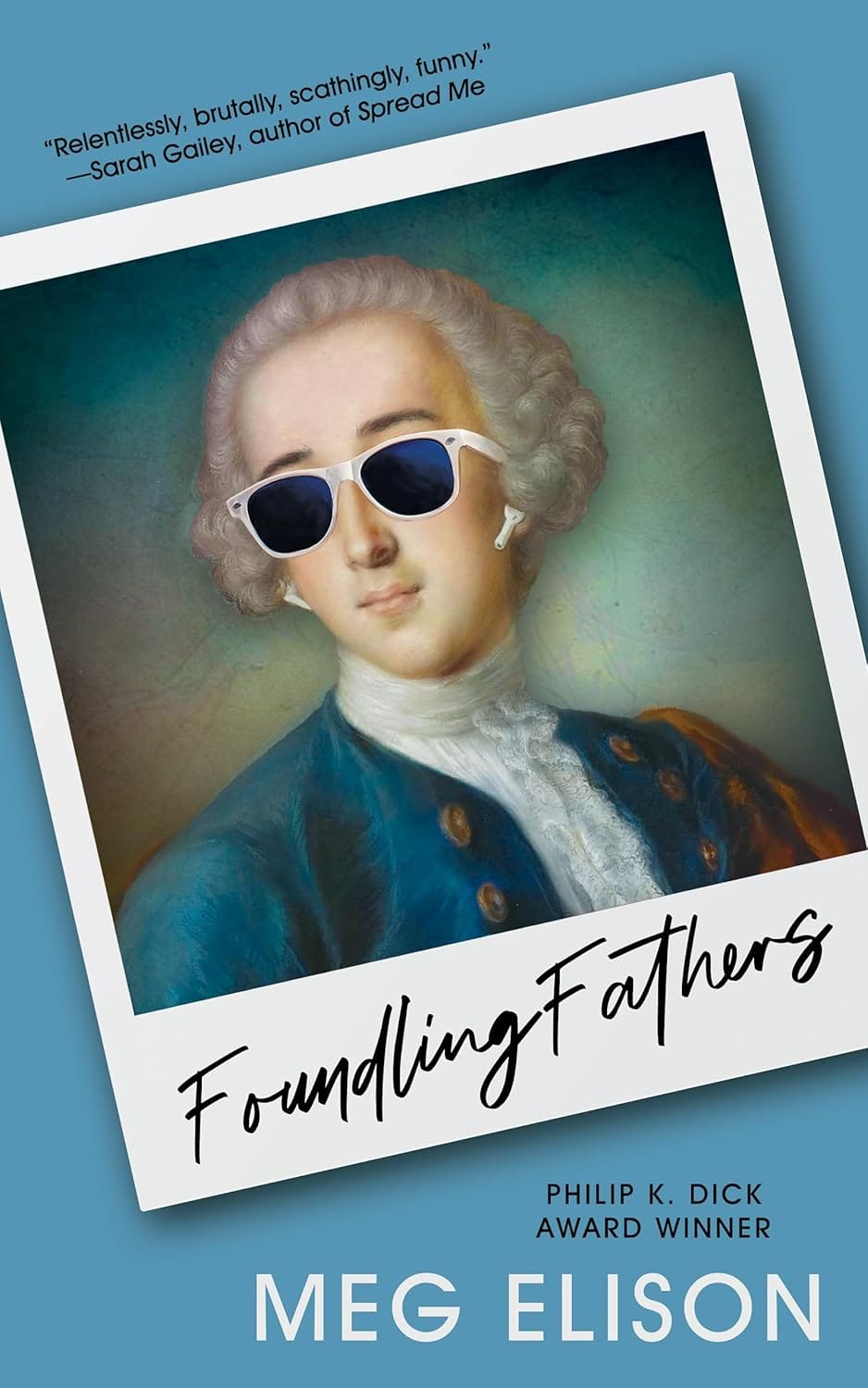
The trouble starts when a curious young man finds a smartphone in his privy. The problem is, it’s supposed to be the year 1750.
The Antediluvian Society—a shadowy cabal of right-wing billionaires—is fed up with a country they cannot fully control or understand. So they have done what any reasonable American patriots would do: Clone the Founding Fathers and raise them in secrecy. The plan, unbeknownst to the boys, is for them to restore America to its "original glory."
Ben takes his technological discovery to his brothers, Thomas, John, and George. The boys have been raised on an isolated island plantation by Mary Libertas, a firm but kind woman, and Jeff Hancock, their de facto father. But the idyllic life is far too dull for young men. The boys have been chafing at the restrictions upon them (especially Tom, who has impregnated yet another of the servants). Hancock is complaining to the Society that it's well past the time to tell the boys where they come from and what they must do.
Unfortunately for their keepers, the young men now have a phone...and many other notions.
Barnes & Noble | Bad River Website | Local Library | Find an Indie Bookstore
Thank you, Meg!!
If you’re a paying subscriber, come say hello in the Supper Club discord and share the ways you’re connecting with and supporting your local community. Remember to drop your local mutual aid networks so we can put them in future issues of the Digest.
In the meantime, do what you can. Care for yourself and the people around you. Believe that the world can be better than it is now. Never give up.
—gailey


Member discussion