
GUEST FEATURE: On Editing an Anarchist SFF Magazine
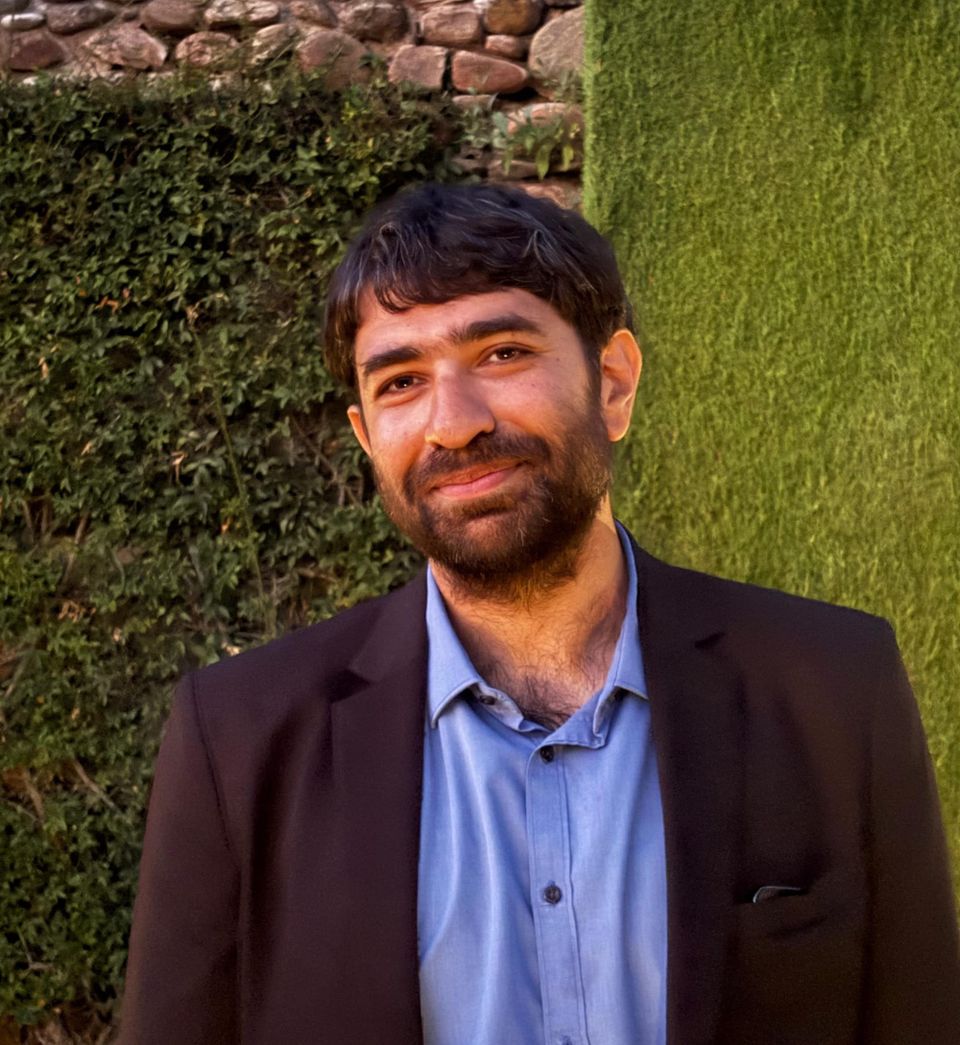
Gautam Bhatia is the co-ordinating editor of Strange Horizons, a weekly online magazine of speculative fiction. He is the author of The Fifth Inflection (Saga/Solaris 2027), which was originally published in South Asia as The Sentence (Westland 2024), and won the Ignyte Award for best novel. His other novels include the duology, The Wall and The Horizon and, as editor, Volumes 1 and 2 of the IF Anthology of New Indian SFF. In his spare time, he is a constitutional lawyer, practicing at the Supreme Court of India.
Ursula Le Guin delivered one of her most well-known lines towards the end of her life when, in her speech accepting the National Book Foundation Medal for Distinguished Contribution to American Letters, she called upon writers to imagine “alternatives to how we live now,” and to become “realists of a larger reality.” As she noted soon after, she had in mind—specifically—capitalism, as something that writers needed to imagine alternatives to. One can scarcely imagine a better person to deliver this message: Decades after it was first published, Le Guin’s The Dispossessed remains perhaps the most fully fleshed out speculative vision of an anarchist society, organised on principles that are antithetical to capitalism, an ambiguous utopia, but one that works—in a way.
I sometimes like to think of Strange Horizons—the magazine that I am the co-ordinating editor of—as the kind of zine that the inhabitants of Le Guin’s Anarres would have published (I’m sure they did publish zines, because any self-respecting collective of anarchists must do so). To friends and colleagues in the genre, we often describe ourselves as “anarchist” (or, in contexts where that word might not land quite so well, as having a “flat structure”). In other words, we—collectively—try to run Strange Horizons in the same way that we—as speculative fiction writers, editors, and above all, fans—imagine the ambiguous utopia of the future would be run.
We do this by adopting a model where our several departments are each fully autonomous units within the magazine, rather than different facets under the overarching oversight and control of an “editor-in-chief.” Our magazine has eight departments: fiction, poetry, art, articles, reviews, podcasts, copy-edits, and accessibility. Within the understanding that Strange Horizons is a weekly magazine, and that we must therefore publish weekly, our departments organise themselves in the way that they wish to, from workflow and selection of pieces, to internal deadlines and accountability. This translates to autonomy even within departments: Poetry notes, for example, “each editor has jurisdiction over work submitted in their reading periods.”
How does all of this come together into one coherent magazine issue? Here again, the principles of anarchism are helpful. Anarchism bases itself on the administration of things rather than the government of people. In a functioning anarchist society, the people who replace the governors of our present-day societies will be primarily performing a coordinating function, and that’s where my own designation comes from: co-ordinating editor, rather than “editor-in-chief.” My task is to ensure that the different components of a weekly issue—the fiction, the poetry, the reviews, the non-fiction—are ready in good time (and to gently remind the concerned department if they’re not), have been proofread and (where required) accessibility tags added, and then to undertake the physical act of publishing the issue. I am also supposed to be on notice in the event that something egregious has slipped past the individual departments and into the final issue, but in the last five years since I’ve been in this position, that has never happened.
Regrettably, the rest of the world has not yet adopted anarchist principles, and so a part of my job is to engage with that outside world and its non-anarchist components: award committees and prize-giving ceremonies, and be the point of contact for that non-anarchist world to interface with Strange Horizons. In a further splitting of traditional functions concentrated at the top, I have no control over—or even access to—the magazine’s finances; that is the responsibility of our administrative editor, Romie Stott.
We take these sets of ideas forward in how we engage with the world: in award nominations and ceremonies, we present ourselves as “the Strange Horizons editorial collective,” rather than provide an incomplete list of names on the masthead (attempts at providing the names of all our members has been met with extraordinarily stubborn obduracy). And while internal policies vary, our pieces carry acknowledgments of the labour of the editor as well as the accessibility and copy-editing departments.
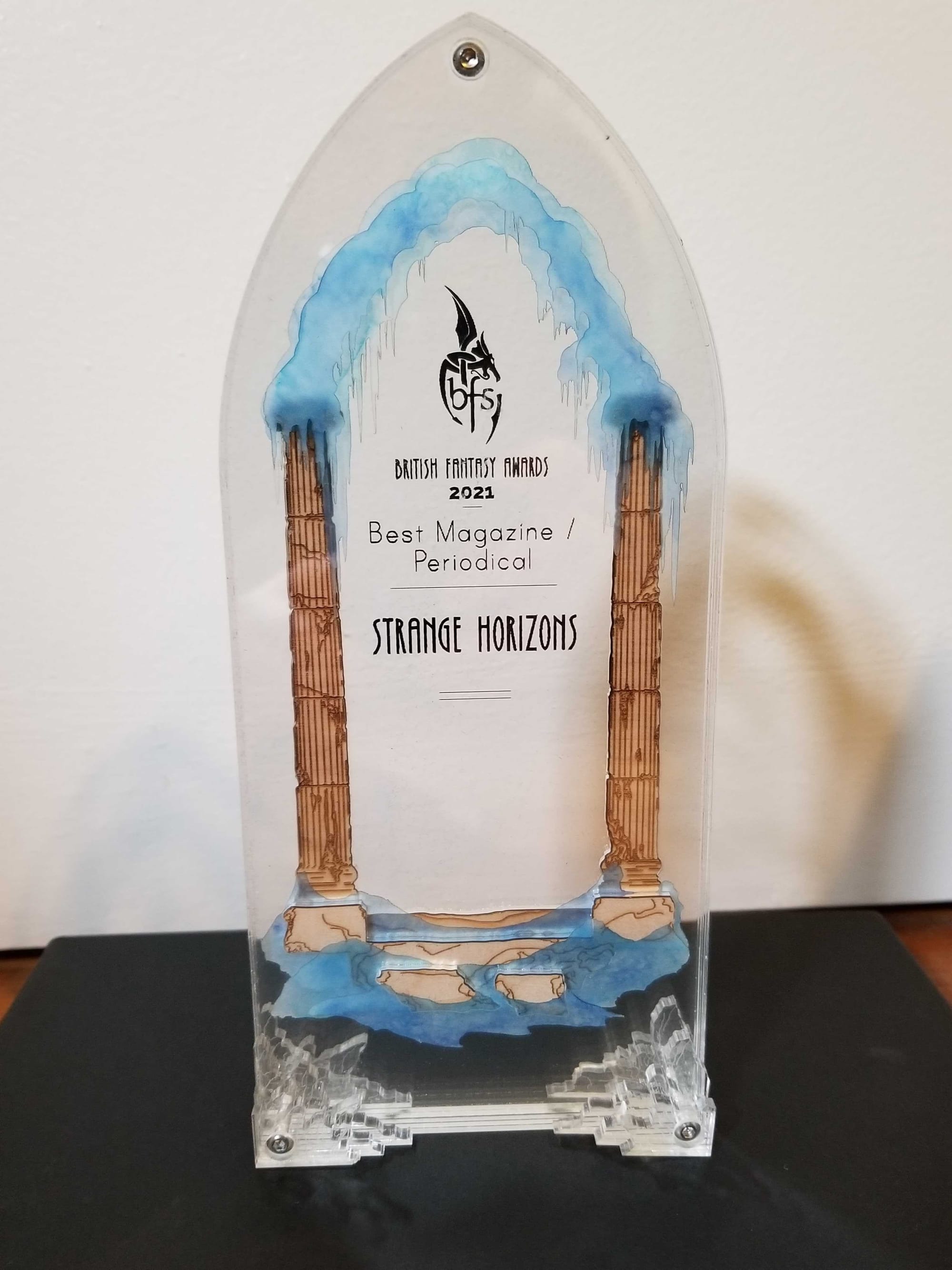
Over the years, we’ve had our fair share of crises, but for the most part, we have survived – and thrived – as an anarchist magazine of SFF, and we hope that in our own small way, we are fulfilling Le Guin’s demand of us, and prefiguring a better world.
In closing, and in the spirit of this piece, I will note—as I did above—we cannot avoid our engagement with the capitalist world. One of these interfaces of engagement is that of money, which has regrettably not yet been abolished. Here as well, though, we try to hew closely to our principles: Strange Horizons is entirely funded by readers’ donations, and we solicit these donations through an annual fund-raiser that takes place in the months of June and July. Our fund-raiser is presently ongoing, and if this piece piqued your curiosity, please consider backing us, so that we can continue publishing into the 27th year of our existence!
Thank you, Gautam!!
If you’re a paying subscriber, come say hello in the Supper Club discord and share the ways you’re connecting with and supporting your local community. Remember to drop your local mutual aid networks so we can put them in future issues of the Digest.
In the meantime, do what you can. Care for yourself and the people around you. Believe that the world can be better than it is now. Never give up.
—gailey


Member discussion